Stone 6mm, 9mm, 13mm, 19mm and 38mm
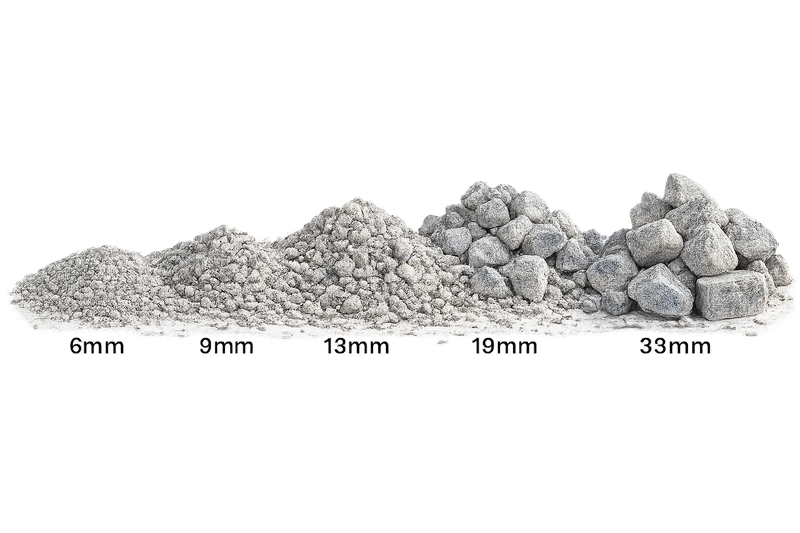
The terms 6 mm, 9 mm, 13 mm, 19 mm, and 38 mm stone refer to the nominal size of crushed aggregate used in construction. Each size has different applications depending on the required strength, finish, drainage, and structural performance.
| Stone Size | Common Name | Typical Uses | Why It's Used |
|---|---|---|---|
| 6 mm | Crusher chips | Concrete paving, floor screeds, precast products, asphalt, pathways | Produces a smooth finish and fills small voids. |
| 9 mm | Small aggregate | High-strength concrete, slabs, driveways, thin concrete sections | Better compaction where reinforcement is closely spaced. |
| 13 mm | Standard concrete stone | Foundations, suspended slabs, columns, beams, precast concrete | Excellent balance between strength and workability. |
| 19 mm | General building stone | House foundations, floors, reinforced concrete, retaining walls, structural concrete | The most commonly used aggregate for residential construction. |
| 38 mm | Large aggregate | Mass concrete, dam walls, bridge foundations, road sub-base, drainage | Reduces cement requirements in large pours and provides excellent stability. |
6 mm Stone
Best for:
Paving blocks
Decorative concrete
Thin concrete toppings
Floor screeds
Asphalt
Advantages
Smooth finish
High compaction
Ideal for detailed work
9 mm Stone
Best for:
Driveways
Reinforced slabs
Concrete countertops
Water features
High-strength concrete
Advantages
Fits around dense reinforcement
Strong finished concrete
Better surface quality
13 mm Stone
Best for:
House slabs
Columns
Beams
Precast lintels
Structural concrete
Advantages
Excellent concrete strength
Easy to pump
Good workability
19 mm Stone
This is the most commonly used building stone in South Africa.
Best for:
House foundations
Concrete floors
Strip footings
Retaining walls
General reinforced concrete
Advantages
High strength
Economical
Good drainage
Suitable for almost all residential construction
38 mm Stone
Best for:
Dam construction
Bridge foundations
Heavy industrial floors
Road base
Drainage systems
Gabions
Advantages
Extremely stable
Excellent drainage
Requires less cement in mass concrete
Ideal for heavy loads
Typical Uses Around a House
| Project | Recommended Stone |
|---|---|
| House foundations | 19 mm |
| Concrete slab | 19 mm |
| Reinforced beams | 13 mm |
| Columns | 13 mm |
| Driveway | 13 mm or 19 mm |
| Garden pathways | 6 mm |
| Decorative landscaping | 6 mm |
| Drainage trenches | 19 mm or 38 mm |
| French drains | 19 mm or 38 mm |
| Septic soakaway | 38 mm |
| Retaining walls | 19 mm |
| Paving blocks | 6 mm |
Which Stone is Most Popular?
For general construction:
19 mm – Most common for residential concrete.
13 mm – Preferred for structural concrete with dense reinforcement.
6 mm – Used for finishing work and paving.
38 mm – Used for drainage and large-scale construction.
9 mm – Used where finer aggregate is needed.
Typical Concrete Mixes (Residential)
| Application | Stone Size |
|---|---|
| House slab | 19 mm |
| Foundation footing | 19 mm |
| Concrete driveway | 13 mm or 19 mm |
| Columns | 13 mm |
| Beams | 13 mm |
| Suspended slab | 13 mm |
| Garden edging | 6 mm |
| Drainage | 38 mm |
Simple Rule of Thumb
6 mm = Fine finishing and paving.
9 mm = Thin, high-strength concrete.
13 mm = Structural reinforced concrete.
19 mm = General-purpose concrete for most buildings.
38 mm = Heavy-duty foundations, drainage, and road construction.
For most residential building projects in Southern Africa, 19 mm crushed stone is the standard choice for foundations and slabs, while 13 mm is often selected where reinforcement is closely spaced or a smoother concrete finish is required.