MPC 32.5
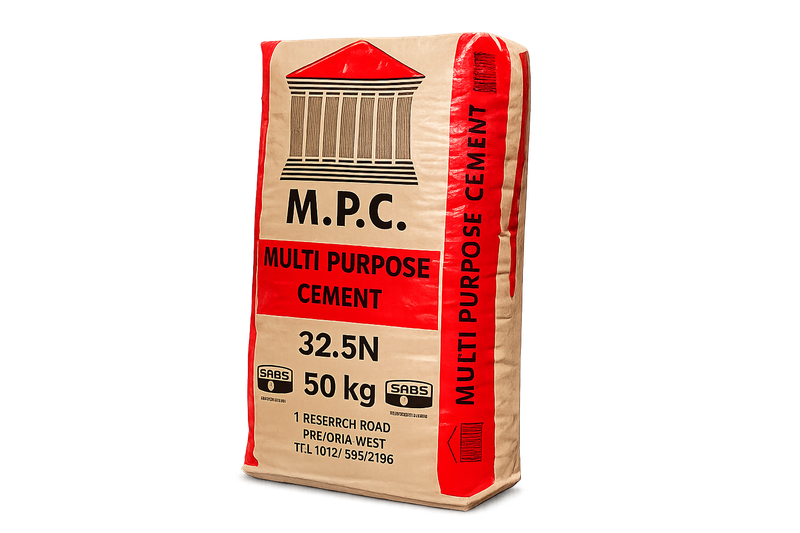
MPC 32.5 typically refers to Masonry Portland Cement (MPC) with a 32.5 MPa strength class.
Here's what it means:
MPC = Masonry Portland Cement
Specifically designed for masonry applications rather than structural reinforced concrete.
It contains Portland cement clinker together with additives that improve workability, water retention, and ease of laying bricks and blocks.
32.5 = Strength Class
Indicates the cement achieves a minimum compressive strength of 32.5 MPa after 28 days under standardized laboratory testing. (IntelliBUILD)
Typical uses of MPC 32.5
MPC 32.5 is ideal for:
✅ Bricklaying
✅ Block laying
✅ Plastering
✅ Mortar
✅ Screeds
✅ Residential masonry work
Advantages
Excellent workability
Easier to spread and finish
Better water retention
Reduced cracking in mortar
Cost-effective for masonry applications
Not recommended for
MPC 32.5 is generally not intended for structural concrete, such as:
Reinforced concrete columns
Beams
Suspended slabs
Foundations carrying heavy loads
For structural concrete, engineers typically specify CEM I or CEM II 42.5 or 52.5 grade cement, depending on the design requirements. (concretesocietysa.org.za)
Comparison
| Cement Type | Typical Use | Strength Class |
|---|---|---|
| MPC 32.5 | Brickwork, plaster, mortar | 32.5 MPa |
| CEM II 32.5 | General-purpose concrete and masonry | 32.5 MPa |
| CEM II 42.5 | Structural concrete | 42.5 MPa |
| CEM I 52.5 | High-strength/precast concrete | 52.5 MPa |
If you're building a house in South Africa, a common guideline is:
Bricklaying and plastering: MPC 32.5
Concrete slabs, beams, columns, and foundations: CEM II 42.5N/R or CEM I 42.5/52.5, as specified by the structural engineer. (IntelliBUILD)