Garden Soil Screen
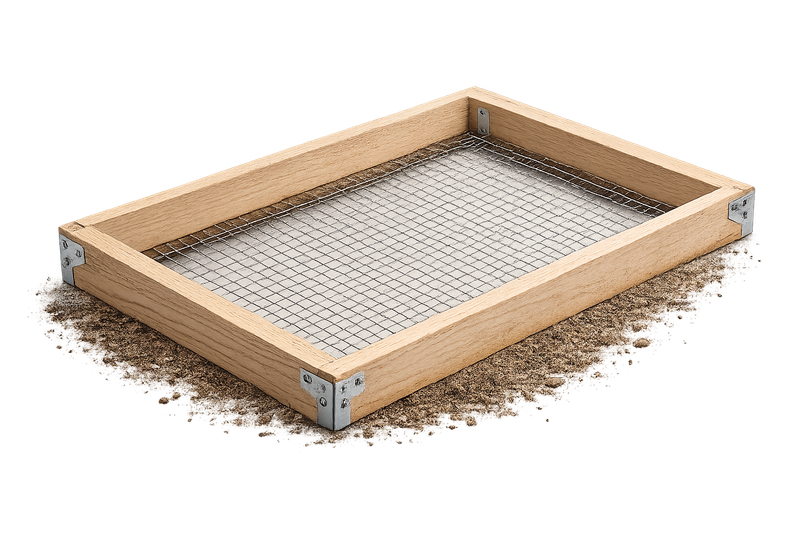
A Garden Soil Screen (also called a soil sifter, soil sieve, or screening mesh) is a tool used to separate fine soil from larger unwanted materials such as stones, roots, sticks, clumps, and debris.
What it is
A garden soil screen typically consists of:
A sturdy wooden or metal frame
A wire mesh or expanded metal screen
Mesh sizes ranging from 5 mm to 25 mm, depending on the application
Soil is placed onto the screen and shaken or rubbed through the mesh. Fine soil falls through while larger materials remain on top.
Common Uses
Preparing topsoil for gardens and lawns
Removing rocks and debris from soil
Making compost finer by removing large organic pieces
Preparing soil for vegetable gardens
Leveling lawns
Producing quality potting soil
Screening sand before construction or paving
Types of Garden Soil Screens
Hand Soil Screen
Small and portable
Ideal for home gardens
Usually made from timber with galvanized mesh
Wheelbarrow Soil Screen
Fits over a wheelbarrow
Soil falls directly into the barrow
Saves time and effort
Inclined Soil Screen
Mounted at an angle
Soil slides down while fine material falls through
Suitable for larger landscaping jobs
Rotary Trommel Screen
Rotating cylindrical drum
Powered by an electric or petrol motor
Used commercially for screening large quantities of soil and compost
Typical Mesh Sizes
| Mesh Size | Best For |
|---|---|
| 5 mm | Fine compost, seed beds |
| 10 mm | General garden soil |
| 12–15 mm | Landscaping soil |
| 20–25 mm | Removing large stones and roots |
Benefits
Produces clean, fine soil
Improves seed germination
Creates smoother lawns and flower beds
Removes weeds, roots, and rocks
Improves drainage and soil structure
Gives gardens a professional finish
Who Uses Garden Soil Screens?
Home gardeners
Landscapers
Nurseries
Compost producers
Farmers
Construction companies
Municipal parks departments
Example
If you dig soil from your backyard, it may contain:
Stones
Roots
Clods of clay
Leaves
Plastic fragments
Passing it through a 10 mm garden soil screen produces clean, loose topsoil that's ideal for planting vegetables, flowers, or laying turf.
For businesses like 4U Brick a Deal, a garden soil screen could also be a valuable product if you supply landscaping materials, topsoil, compost, or construction aggregates, as it complements services related to gardens, paving, and site preparation.